Your home isn't messy - it's mentally loud. Get Your FRee 5-day home reset challenge!!

The Real Reason Your Bedroom Exhausts You (And Three Things That Cost Nothing To Fix It)
Tired but can't sleep? The real reason your bedroom exhausts you isn't laziness—it's psychology. Learn the 5-minute, cost-free fix and join our free 5-Day Home Reset.
4/5/20265 min read
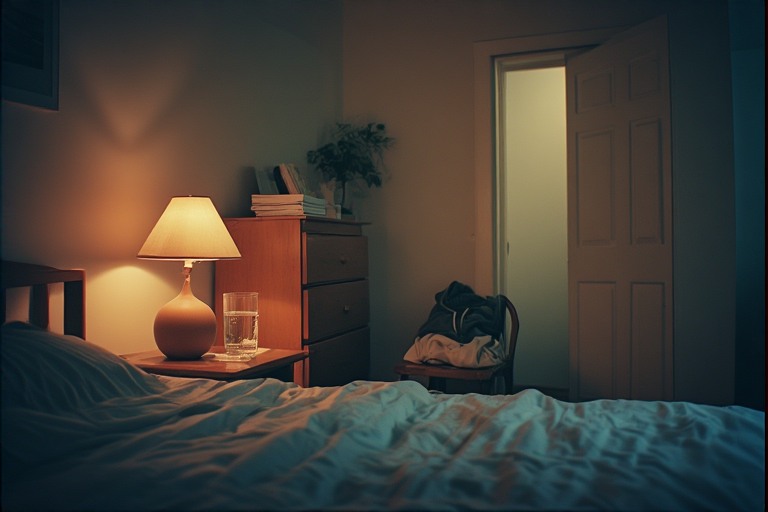
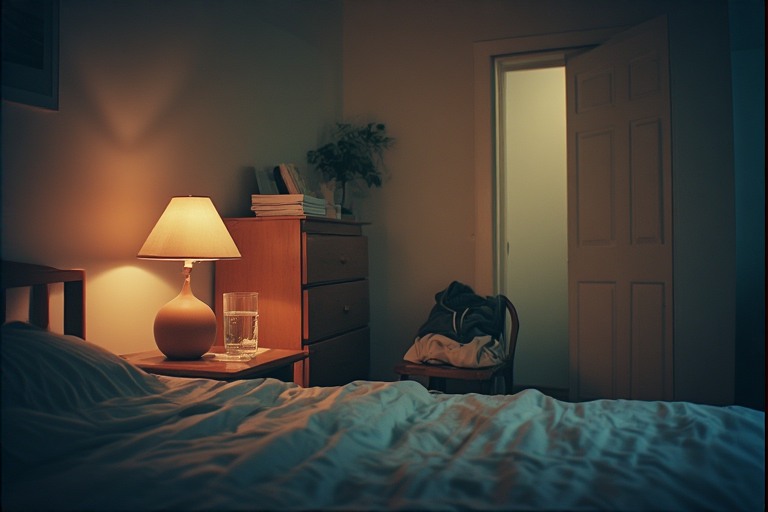
It’s 11:17 on a Tuesday night. You’ve been tired for two hours, but here you are, sitting up against your headboard, phone in hand, thumb scrolling past things you don’t actually care about. The lamp on your nightstand is too bright — you’ve always known this — but you’ve never changed the bulb. On the dresser across from the bed, three water bottles stand in various stages of emptiness. A pile of mail has colonized the corner of your desk. A hoodie hangs off the back of your chair like a ghost.
You look at the mess. You feel the mess. But you don’t get up to fix it, because fixing it feels like effort, and effort is the opposite of what you came in here for.
So you stay. Tired. Awake. Somehow both.
I know that night. I lived that night for years. And here’s what I’ve come to understand since then: the problem wasn’t that I was lazy or undisciplined. The problem was that I had turned my bedroom into a place my brain had to work — and then wondered why it couldn’t rest there.
The Real Reason Your Bedroom Exhausts You.
Here’s the psychology we almost never talk about.
Your brain is constantly scanning your environment for things that need attention. It’s an ancient survival mechanism — back when a rustle in the grass might be a predator, noticing everything kept us alive. But here’s what happened: we filled our bedrooms with rustles in the grass.
That pile of clothes on the chair? Your brain registers it as an incomplete task. The stack of books you’ll “get to someday”? Another open loop. The random charging cables, the orphaned socks, the candle you finished three months ago that’s still sitting there because moving it to the kitchen felt like too many steps? Each one of those objects is making a tiny, quiet demand on your attention. They whisper, deal with me. And your poor nervous system, trying to wind down for sleep, is instead running a silent background process called everything I still need to handle.
Researchers call this the attentional cost of clutter. I call it death by a thousand papercuts to your peace.
The result is that you walk into your bedroom expecting rest, but your brain walks into a to-do list. And no amount of deep breathing or fancy pillows will override that until you clear the visual noise.
This is why minimalist spaces feel so good, by the way. Not because they look pretty in magazines. Because they stop asking things of you.
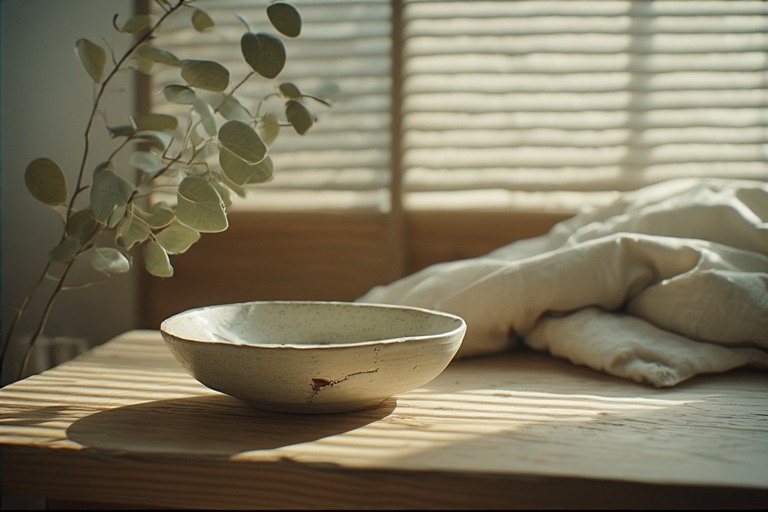
Three Things That Cost Nothing (But Change Everything)
I learned this the hard way — after one too many sleepless nights, after realizing I was avoiding my own bedroom during the day because it made me feel vaguely guilty. So I started experimenting. Small things. Almost embarrassingly small. And the shifts were bigger than I expected.
Here’s what actually worked. I call it the Evening Surface Sweep — three steps that take less than five minutes and cost absolutely nothing. Do them right before you brush your teeth, and I promise you’ll feel the difference the moment you walk back in.
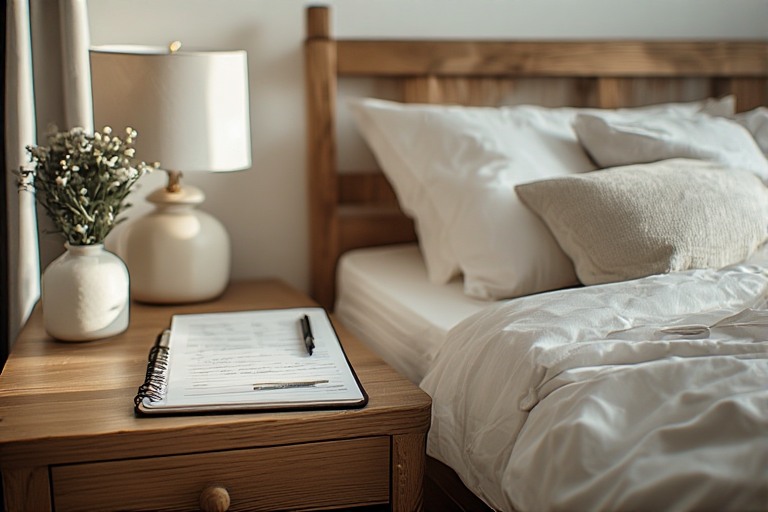
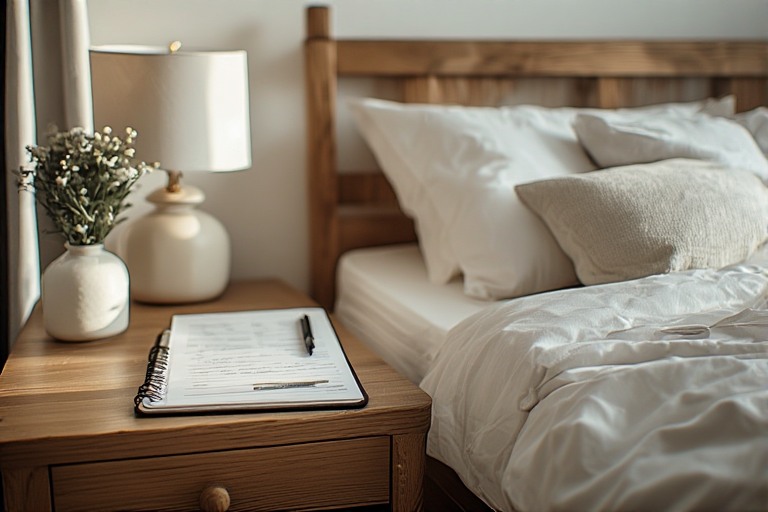
Step One: Clear the nightstand completely.
Not organize it. Not rearrange it. Clear it. Take everything off — the books, the lotion, the phone, the coasters, the three different kinds of lip balm. Put them on the floor or the bed for a second. Then wipe the surface down with the edge of your sleeve or a tissue. Now put back only what you actually used in the last three nights. For me, that’s my water glass, my reading light, and one book. Everything else finds a home somewhere else — not “somewhere else in the bedroom.” Somewhere actually elsewhere.
Step Two: Identify the one surface that bothers you most and remove three things from it.
Don’t try to fix everything. That’s how people burn out and give up. Just pick the surface that catches your eye every time you walk in — the dresser, the desk, the floor in front of the closet — and remove exactly three objects from it. Not throw away necessarily (though you can). Just move them. Into a drawer, into another room, into a bag for later. Three things. That’s it.
Step Three: Close the visual doors.
Here’s the weird one. Walk around your bedroom and look for anything that has a door or lid that’s currently open. The closet door that’s ajar. The laundry hamper with the lid up. The drawer that didn’t get pushed all the way shut. Close them. Every single one. This sounds almost too simple to matter, but I swear to you — an open closet at night is a visual demand on your brain. It says there’s more in here. Closing it says done for now.
That’s it. That’s the whole thing. Five minutes, maybe less.
Why This Small Thing Actually Matters
Here’s what I’ve found, and what I hope you’ll find too.
When you clear the space right next to your sleeping body — the nightstand, the dresser surface, the open closet — you aren’t just tidying. You’re telling your nervous system: nothing is required of you right now. You’re removing the tiny little demands that have been stealing your rest without you even knowing it. And when those demands go away, something shifts. Not dramatically. Not overnight. But softly. Like the silence after a loud fan finally gets turned off.
You stop bracing. You start breathing. You remember that this room was never supposed to be a storage unit or a laundry staging area or a catch-all for the life you’re too exhausted to put away. It was supposed to be the place where you stop performing and start being.
And that’s worth five minutes. That’s worth three objects. That’s worth closing a closet door.
If this landed for you — if you felt that little exhale reading it — I’ve put together something I think you’ll love. It’s called the Nirri Home 5-Day Home Reset Challenge, and it’s completely free. Five days, five small shifts, each one rooted in the same psychology and gentle Japandi principles I shared here. No overhauling your whole life. Just your bedroom. Just enough to remember what rest actually feels like.
You can join right here: https://nirri-home.kit.com/7556d36270
I’ll see you in there.
EXPLORE
© Nirri Home. All rights reserved.
QUICK LINKS