Your home isn't messy - it's mentally loud. Get Your FRee 5-day home reset challenge!!

The Year-End Home Inventory: A Gentle Guide to Reflecting, Not Regretting
Feeling the "Beautiful Chaos" of a new year approaching? This gentle home inventory guides you to reflect—not regret—through a mindful, therapeutic 5-part practice.
DECLUTTERING & ORGANIZATIONALL GUIDES
12/5/20255 min read

The Year-End Home Inventory: A Gentle Guide to Reflecting, Not Regretting
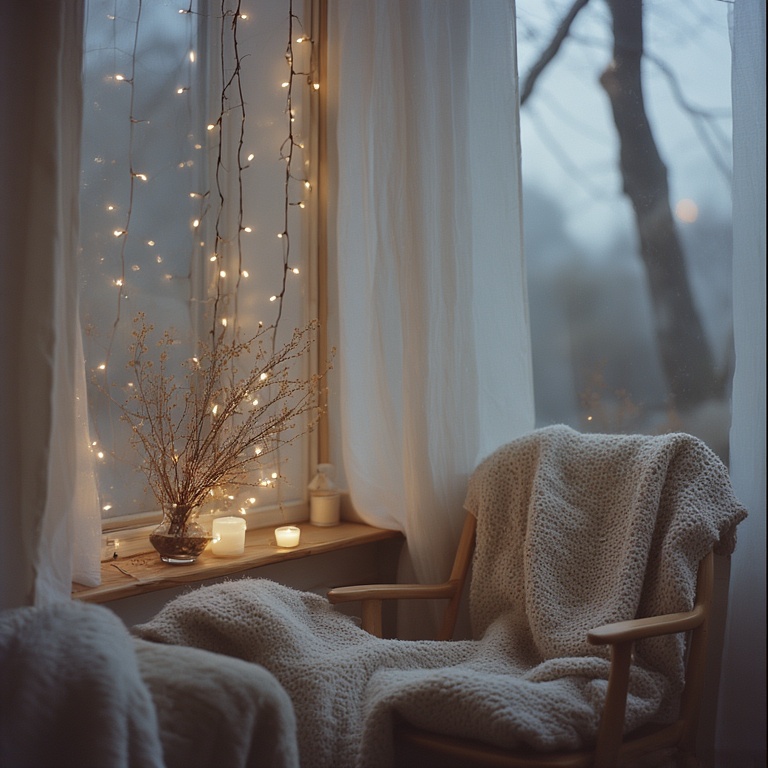
There's something tender about December. The string lights glow softly in windows. Candles flicker on mantels. We wrap ourselves in blankets and dream of cozy evenings. And yet—beneath the magic—there's often a whisper of unease. Another year nearly gone. What did I actually do with all that time?
We assess our finances at year-end. We set health goals. We review our careers, our relationships, our personal growth. But what about the space where we actually live our entire lives? The rooms that hold our mornings and our meltdowns, our quiet moments and our chaos?
When Beautiful Still Feels Heavy


Maybe your home looks lovely from the outside. You've chosen beautiful things. You have good taste. But somehow, it still feels... draining. You straighten the same pile every morning. You can't find what you need. You walk into certain rooms and feel your shoulders tighten, just slightly.
You've tried the quick fixes—the organizational hack, the weekend purge, the Pinterest-perfect system that lasted exactly three days. And you're tired. Not of your home, but of fighting with it.
What if, instead of another brutal declutter, you tried something gentler? Something that honors both you and your space?
Let's call it a Home Inventory—but not the kind that counts and categorizes. This one creates awareness without demanding action. It gathers data about the relationship between your spaces and your inner world.
The Mindset Shift: Ma Before Movement
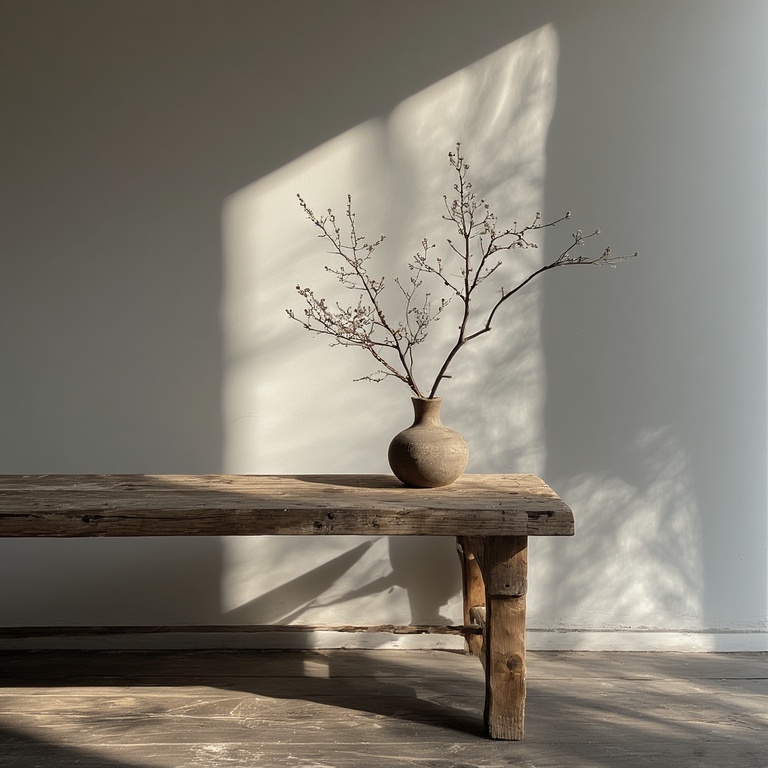
In Japanese aesthetics, there's a concept called ma—the meaningful space between things. The pause. The breath. The quiet that makes beauty possible.
Before we can create outer space, we need inner space. Space to notice. Space to feel. Space to understand why certain corners of your home weigh on you while others lift you up.
This inventory is about making that space first.
No criticism. No shame. No "shoulds." Just gentle, curious observation—the way you might watch clouds shift across the sky.
The 5-Part Inventory
Part 1: Energy Mapping
Take a notebook and walk slowly through your home. Not to clean or fix, simply to notice.
Where do you feel your shoulders drop and your breath deepen? Where does a subtle tension creep in—a tightness in your chest, a quickening of your thoughts?
You're not looking for explanations yet. You're just collecting data. A simple star for spaces that feel peaceful. A small dot for spaces that feel heavy. Notice the pattern that emerges.
Part 2: The "Sigh" Spot
Every home has at least one—that drawer, shelf, corner, or closet that consistently causes a micro-sigh of frustration. The place where things land but never leave. The spot you avoid looking at directly.
Your task isn't to empty it. It's simply to name it. To acknowledge: This space and I are not in harmony right now.
What's underneath that sigh? Guilt about items you bought but don't use? Overwhelm about decisions you haven't made? Grief about a version of yourself that no longer fits?
Just notice. Without fixing.
Part 3: Joy Audit
Somewhere in your home are objects that truly delight you—that make you smile when you hold them, that carry genuine meaning. But they're buried, hidden, relegated to the back of a drawer or the top of a shelf.
Find three of them.
A ceramic mug that feels perfect in your hands. A photograph that captures a moment of pure happiness. A book that changed something in you. A scarf in a color that makes you feel alive.
Why are these treasures invisible? What would it mean to honor them more?
Part 4: Flow Check
Notice how movement feels in your home. Not the grand gestures, but the small frictions.
Is there a hallway where you have to turn sideways? A doorway where bags and coats eternally pile? A path to the bathroom that requires navigating an obstacle course?
These aren't just physical blocks—they're places where your daily life snags. Where your energy drains, drop by drop.
Again, you're not solving anything yet. You're simply becoming aware of where flow has become friction.
Part 5: Sensory Overload Scan
Walk through each room and notice: Where does your eye rest peacefully? Where does it dart around, overwhelmed by competing patterns, colors, textures?
Which room has the light that makes you feel most alive—soft morning sun, warm evening glow? Which room feels dim and heavy?
Visual noise and light quality aren't superficial concerns. They're the constant background hum of your daily experience. When a space is too busy, your nervous system never quite settles.
Your Reflection Worksheet
Take a quiet moment with these prompts. Let yourself write without editing.
"The room that felt most peaceful this year was ______ because ______."
"The one spot that causes a sigh is ______. What emotion is underneath that sigh?"
(Guilt? Overwhelm? Indecision? Grief? Perfectionism?)
"One object I love but never see is ______. How could I honor it more?"
"When I walk through my home, the place where I feel friction is ______."
"The room with the most visual noise is ______. The room with the most calming light is ______."
"For 2026, I want my home to feel like these three words: ______, ______, ______."
The Gift of Awareness


This inventory isn't a to-do list. It's not a deadline or a demand. It's a foundation.
The insights you've gathered—the energy patterns, the emotional undertones, the hidden treasures and stubborn friction points—these are gold. They tell you exactly where your home needs your attention, and more importantly, why.
When you're ready to take action, you won't be following someone else's generic decluttering checklist. You'll be responding to what you actually need. Your home. Your nervous system. Your life.
And that makes all the difference.
This awareness is your compass. When you're ready to move from compassionate observation to creating lasting change, this is where the real transformation begins.
Hold These Insights Gently
You've done beautiful work here. You've looked at your home with compassion instead of criticism. You've noticed without judging. You've gathered awareness without demanding immediate change.
Rest in that for now.
When you're ready to Redesign with intention, join our Sanctuary Reset. We'll gently guide you from the awareness you've just cultivated into a home that truly feels like an inner sanctuary.
But for now? Simply notice. Simply breathe. Simply know that you're exactly where you need to be.
Your home is not a problem to solve. It's a relationship to nurture.
EXPLORE
© Nirri Home. All rights reserved.
QUICK LINKS