Your home isn't messy - it's mentally loud. Get Your FRee 5-day home reset challenge!!

Why the Art on Your Walls Speaks to Your Nervous System (And the Ancient Japanese Tradition That Gets It Right)
Your wall art is never truly off-duty. Learn the mindful psychology behind choosing pieces that calm your nervous system—not compete with it. Plus a free 5-day home reset to transform your space.
4/21/20267 min read
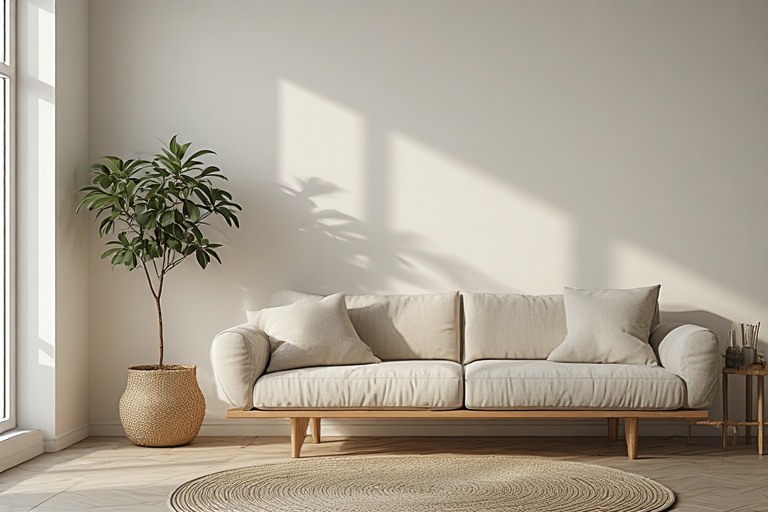
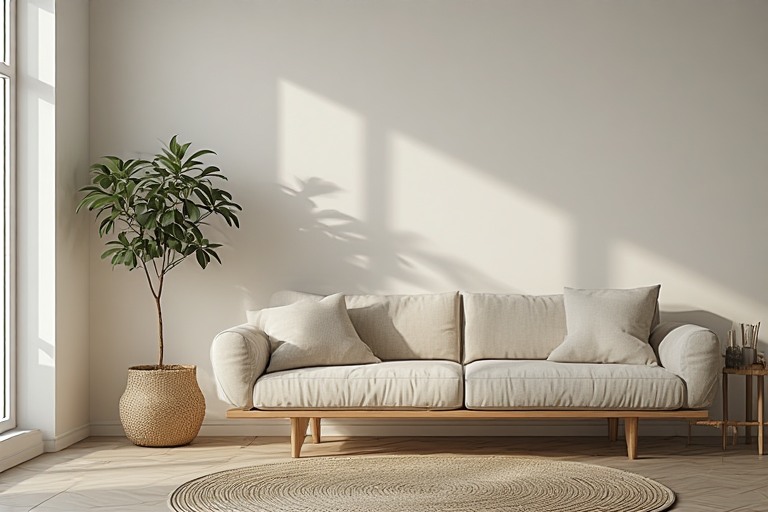
You spent good money on that sofa. The one that actually supports your lower back instead of swallowing you whole. You bought curtains that aren't grey — real ones, with texture. You have plants that have survived longer than three months, which feels like a minor miracle you're afraid to jinx by mentioning out loud.
And yet.
The walls. Those walls.
Maybe yours are bare. Not minimal in a thoughtful way — just blank. You've stared at paint swatches until your eyes crossed. You've scrolled through thousands of art prints online, saved seventeen of them, and bought exactly none. Nothing feels right enough to commit to, and so the walls stay quiet in a way that isn't peaceful but absent.
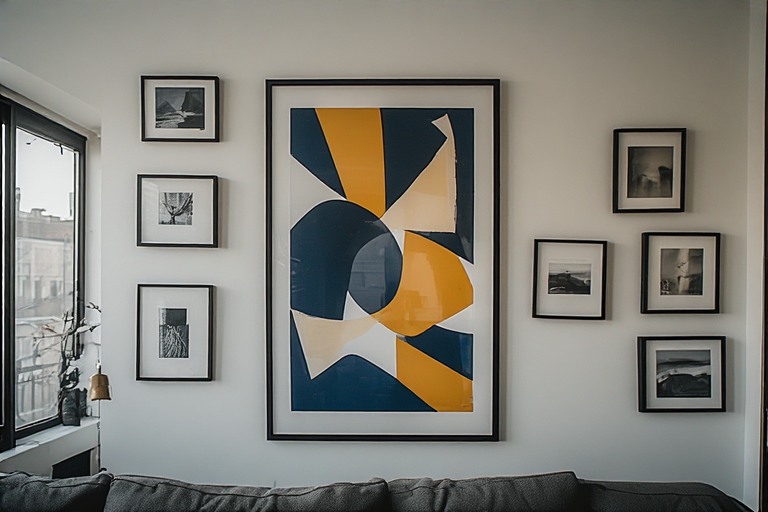
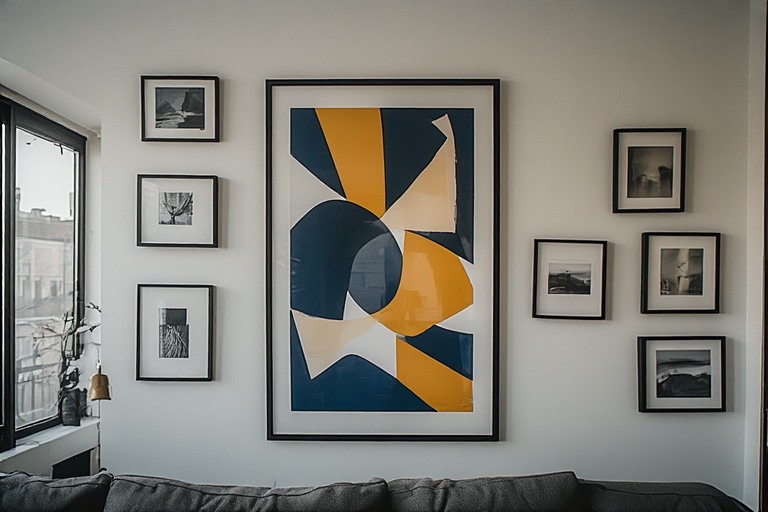
Or maybe you did hang things. A print from that home goods store that looked so right in the aisle. A photograph you thought would make the room feel sophisticated. A gallery wall you assembled from a tutorial, and now every time you walk past it something feels slightly off — like guests who showed up to the party but don't know anyone. They're on your walls, but they don't feel like yours.
Neither version is working. And you can't quite explain why.
The Hidden Cost of "Background" Art
Here is what I discovered over time, after years of getting this wrong myself.
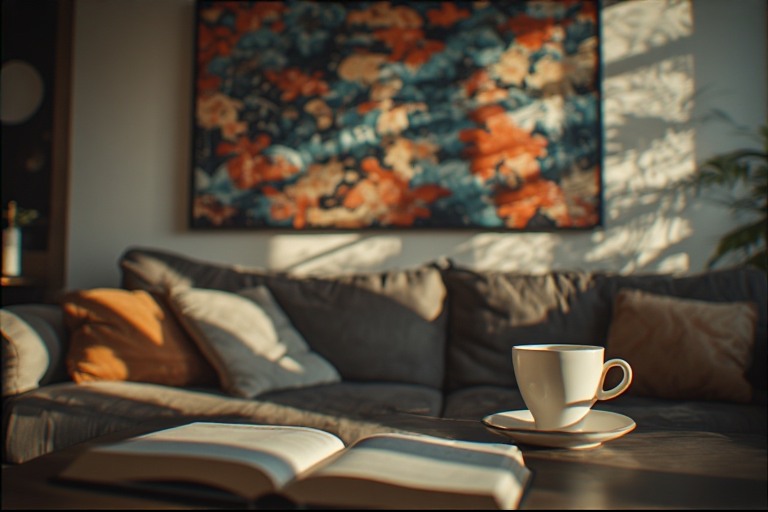
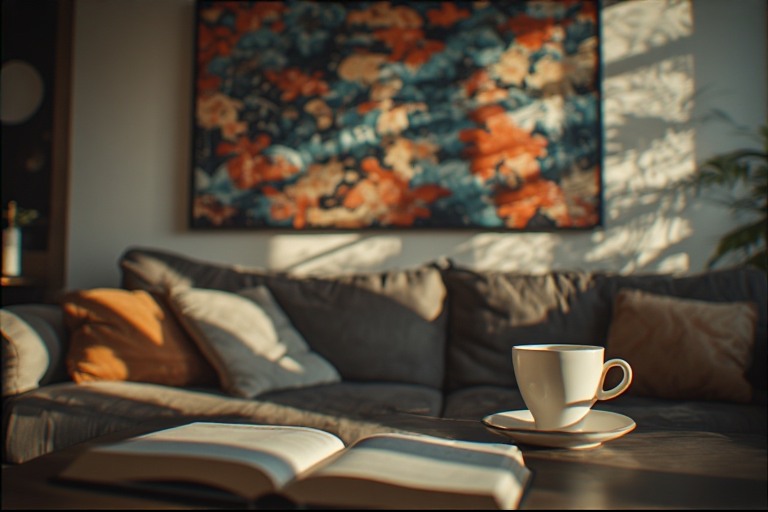
The art on our walls is not decoration. Not really. Decoration is the thing you notice when you walk into a room, think "oh that's nice," and then forget about. Art on your walls is something else entirely. It's ambient information.
Let me explain what I mean by that.
Your brain is processing visual information all the time. Even when you're not looking at something. Even when you're reading, cooking, arguing with your partner about whose turn it is to take out the recycling. Your eyes are still sending signals to your brain about everything in your peripheral vision — the colours, the contrasts, the shapes, the chaos or calm of whatever is hanging three feet from your face.
Psychologists call this ambient visual processing. And here's the part nobody tells you: it never stops.
Think of it like background music in a coffee shop. You're not actively listening to it. But if it's loud and chaotic and full of abrupt key changes, a part of you stays slightly on edge. Now imagine that music playing in your home. Every day. For years.
That's what your wall art is doing to your nervous system right now. Quietly. Constantly.
A visually busy piece — high contrast, emotionally neutral, no negative space — is keeping a small part of your brain occupied at all times. Not in a dramatic way. Just enough that you never fully settle. A calm, minimal, nature-rooted piece does the opposite. It gives your visual processing system somewhere to rest. Like a cleared path through a forest instead of a thicket you have to push through.
Three Questions to Ask Before You Hang Anything
The Japanese figured this out centuries ago.
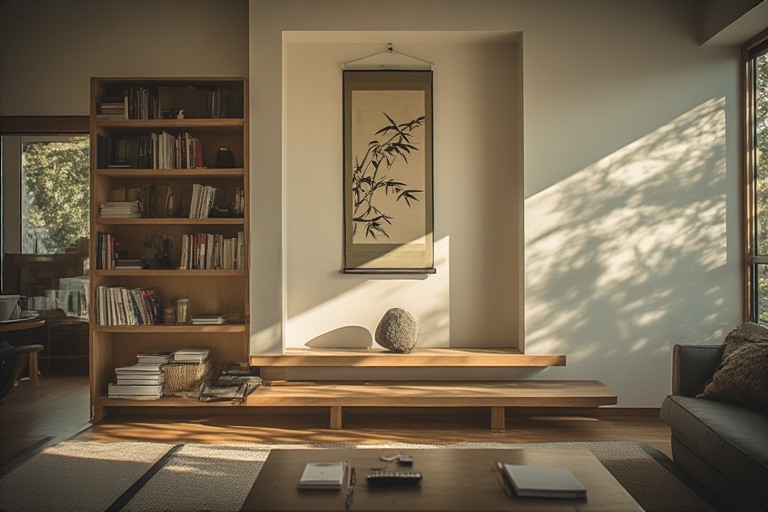
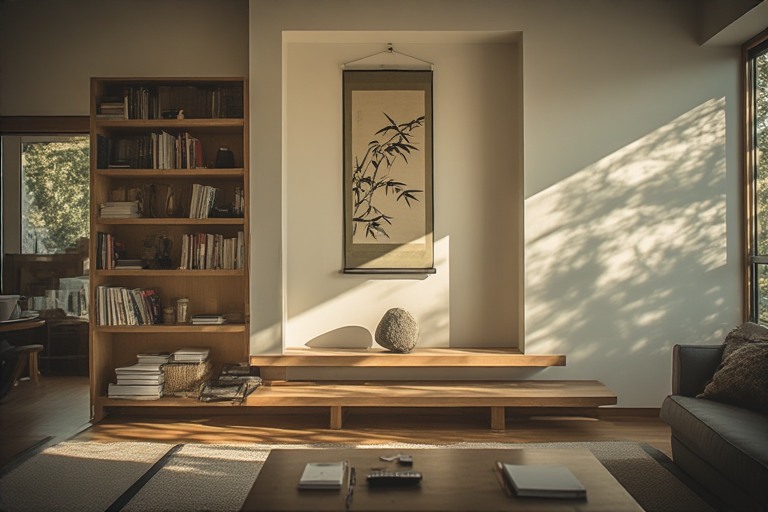
In traditional Japanese homes, there was something called the tokonoma — a small, raised alcove in the main room. Not a shelf. Not a gallery wall. A single recessed space designed to hold exactly one piece of art or one beautiful object. A scroll. A flower arrangement. A ceramic vessel.
That was it. One thing.
And here's what makes me emotional every time I think about it: they changed it with the seasons. Not because they were redecorating. Because they understood that what your mind needs in the thick humidity of August is different from what it needs in the quiet dark of January. The tokonoma wasn't decoration. It was a daily conversation between the home and the person living in it.
Modern neuroscience has basically confirmed what this tradition already knew. Intentional, minimal, nature-rooted visual anchors help the brain downregulate from alert mode to rest mode. One study I read found that viewing nature-based art for even forty seconds reduced cortisol levels. Forty seconds.
The Japandi approach — Japanese intentionality meeting Scandinavian warmth — treats every wall as breathing space rather than display space. You choose art the way you would choose a daily companion: not for how impressive it looks when you're showing off your home to someone else, but for how it makes you feel when you're alone on a Tuesday and not even thinking about it.
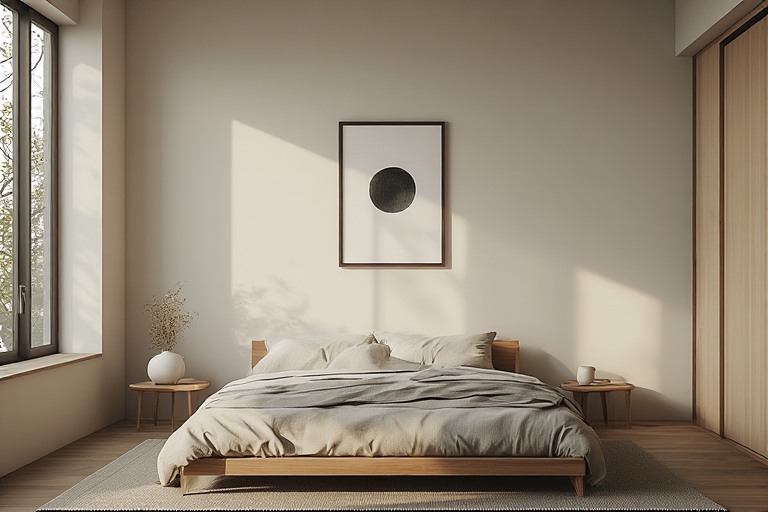
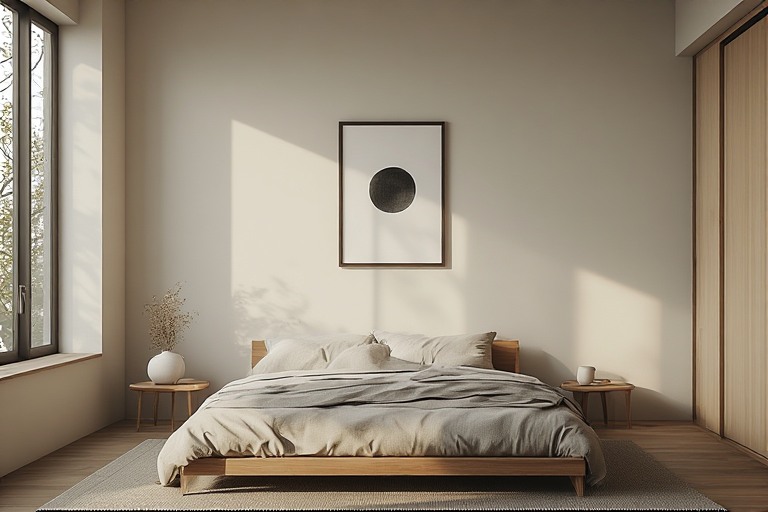
Why Sumi-E Works So Well for the Nervous System
Sumi-e is the Japanese art of ink painting. But calling it that makes it sound like a technique. It's not. It's a philosophy made visible. The belief that a single expressive brushstroke — the imperfect circle drawn in one gesture, a branch painted with more negative space than ink — communicates something that a technically perfect photograph never can.
The monochrome palette reduces cognitive demand. Your brain doesn't have to process a spectrum of colours competing for attention. Just black ink on warm paper. That's it.
The visible brushwork registers as safe and human rather than cold and machine-made. You can see the hand that made it. The slight tremor. The moment the brush hesitated and then committed. That imperfection — the wabi-sabi principle — tells your nervous system a human was here. You are among your own kind.
And the empty space. God, the empty space. A sumi-e composition is often more blank paper than ink. That's not absence. That's generosity. It gives your eye somewhere calm to land, again and again.
This is what I had in mind when I designed the Nirri Home wall art pieces. Not art that impresses. Art that restores.
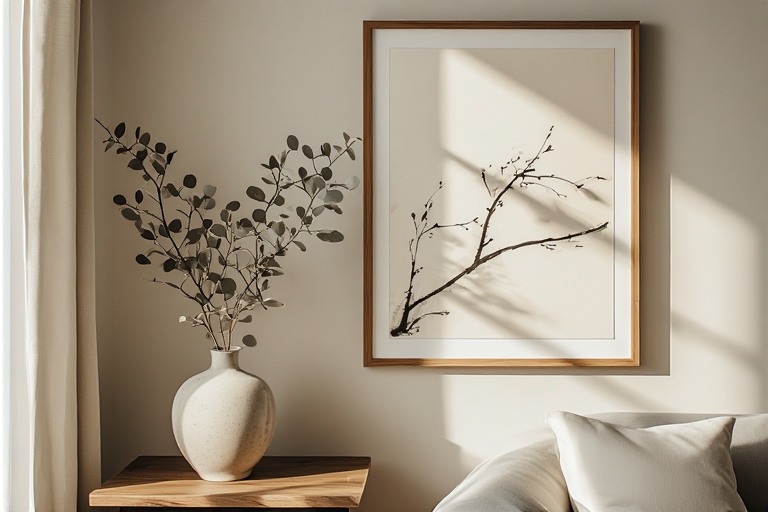
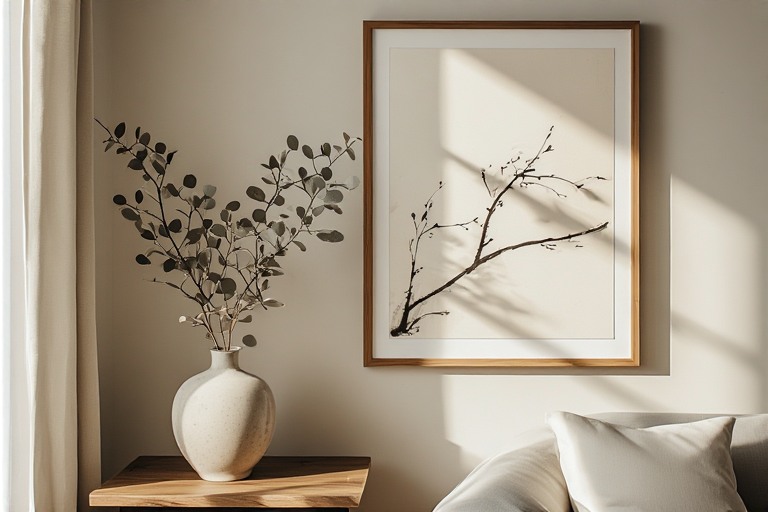
How to Live With Intentional Wall Art
A few practical things I've learned about actually living with intentional wall art.
Placement matters more than you think. Don't just pick a blank wall. Notice where your eyes naturally fall when you're sitting in your most-used spot. That's where the art goes. You're not filling space. You're placing an anchor.
Resist the gallery wall instinct. I know they look good on Instagram. I know it's tempting to fill every inch. But what your nervous system actually needs is one well-chosen piece with breathing room around it. Let the wall be part of the composition. The empty space is not wasted. It's doing work.
And consider changing your art with the seasons. Not because you have to buy new things constantly. Just rotate what you already have. Move the winter piece to the bedroom. Bring out the spring branch painting. The tokonoma tradition was never about consumption — it was about keeping your home in conversation with where you are in the year. That can be as simple as swapping one print for another. Or turning the frame to face the wall for a week and noticing how the silence feels.
Choosing what goes on your walls is one of the most underestimated acts of home intentionality.
Unlike the objects on a shelf that you can move and rearrange whenever the mood strikes, the art on your walls speaks to you every single day. For years. In the morning when you're half-awake and not ready to face the day yet. In the evening when you're too tired to do anything but sit. On the hard days when you don't have the energy to rearrange the shelves but you still need your home to hold you.
Choose it with the same care you would give to choosing a daily companion.
Not for its impressiveness. For its kindness to your mind.
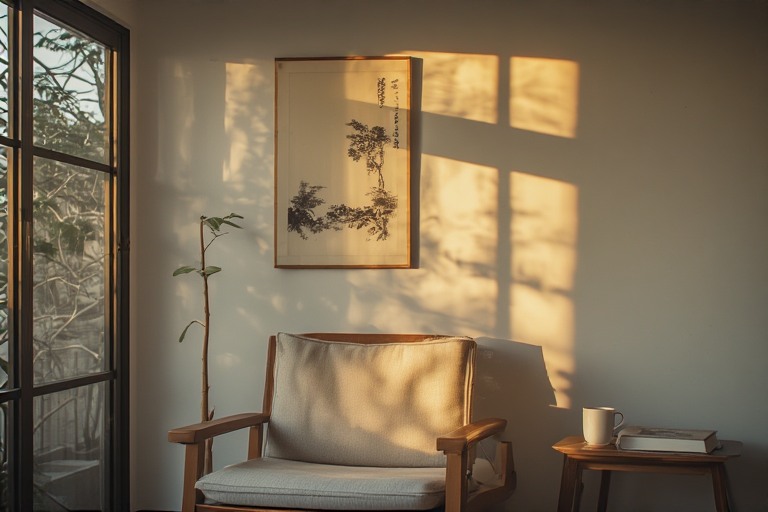
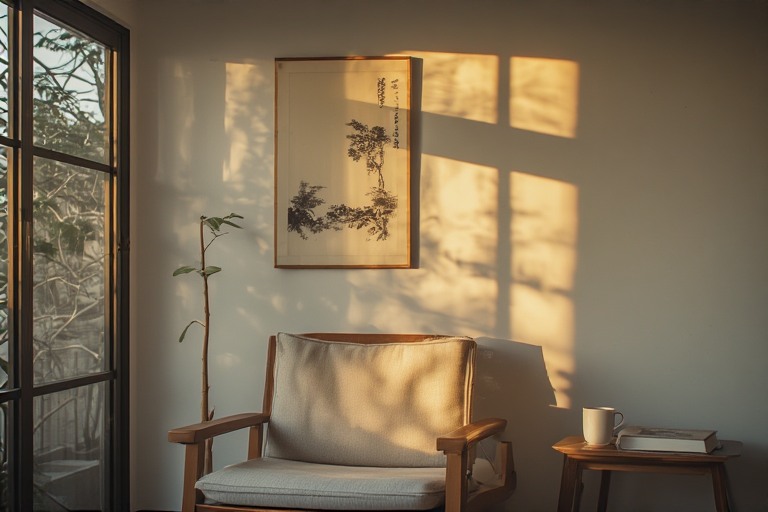
If you want to spend more time with this — looking at your walls, your shelves, all the quiet spaces in your home that might be working harder than you realised — I made something for you. It's called the 5-Day Home Reset Challenge. Five days of gentle prompts, no perfectionism allowed, just a chance to look at your home with fresh eyes. Your walls are only one of the spaces we'll talk about.
You can find it here. Free. Because I genuinely believe everyone deserves a home that rests them.
And if you want to read more about the philosophy underneath all of this — the wabi-sabi piece I wrote about why perfect-home anxiety is making us all miserable — it's right here.
So here are the three questions I ask now when choosing mindful wall art for my home. I hope they help you the way they've helped me.
First: When this piece is in your peripheral vision while you're doing something else entirely — folding laundry, making tea, staring into space — does it pull at your attention or release it? Some art grabs. It wants to be looked at. That's fine for a gallery. For your home, you want the opposite. You want art that lets your attention rest somewhere else.
Second: Does this piece contain more silence than it contains noise? Look at the negative space. Is there enough of it? Or is every inch of the canvas busy, filled, trying to earn its keep? A piece that knows how to be quiet is giving you a gift. It's saying you don't have to look at me all the time. I'll just be here.
Third: Does it reference nature in any way — through its subject, its palette, its texture, its imperfection? Our brains are wired to find natural forms less stimulating and more restorative than synthetic or abstract ones. A branch. A stone. A wave. The suggestion of a mountain. Even just the organic texture of handmade paper or an imperfect brushstroke. Nature doesn't have to be literal. But your brain knows the difference.
Your bedroom, in particular, is where ambient visual noise does the most damage to your rest. I wrote about that here.
EXPLORE
© Nirri Home. All rights reserved.
QUICK LINKS